 10 China
  1 Spain
  1 Germany
Lfp Vs Ncm For Industrial Us - China
price: 1.00 Dollar US$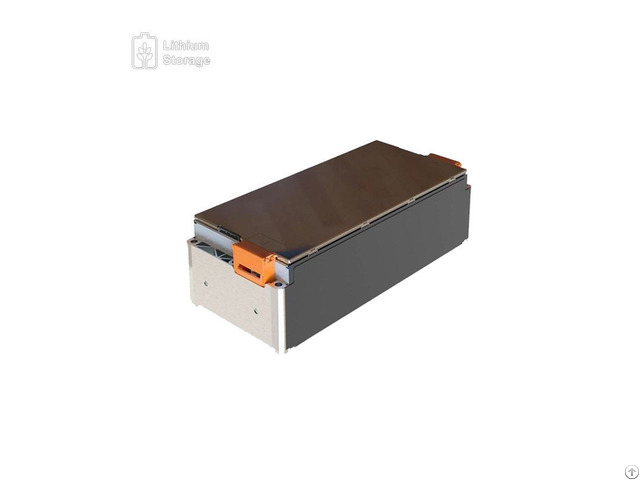

For industrial applications like forklifts and warehouse equipment, Lithium Iron Phosphate (LFP) is generally the superior choice over Nickel Manganese Cobalt (NCM).
While NCM offers higher energy density, LFP excels in the three areas that matter most for industrial operations: safety, cycle life, and total cost of ownership .
Safety and Thermal Stability
The most critical difference between these chemistries is how they respond to stress.
LFP batteries have an exceptional thermal runaway threshold, remaining stable at temperatures exceeding 250°C to 300°C .
NCM cells, by contrast, can begin thermal decomposition as low as 130°C to 200°C .
This difference stems from fundamental chemistry.
LFP uses a robust olivine crystal structure held together by strong phosphate-oxygen bonds.
This structure remains stable under high temperatures and physical stress, releasing minimal oxygen even during failure .
NCM uses a layered oxide structure that is inherently less stable, especially as nickel content increases.
When NCM cells do fail, they release four times more heat and significant flammable gases, often resulting in fire or explosion .
For warehouses where forklifts charge in occupied areas and operators work nearby, this safety advantage is decisive.
LFP batteries eliminate the need for expensive fire suppression infrastructure and reduce insurance concerns .
Cycle Life and Longevity
Industrial equipment operates daily, often across multiple shifts.
LFP batteries typically deliver 3, 000 to 6, 000 cycles while maintaining 80% of original capacity .
NCM batteries generally last 1, 500 to 2, 500 cycles under similar conditions .
This difference translates directly into replacement frequency.
A forklift completing one full cycle per day would need LFP replacement roughly every 8 to 10 years, while NCM would require replacement every 4 to 6 years .
Over a decade of operation, NCM may need two or more complete battery replacements while LFP typically needs none.
Energy Density Considerations
NCM clearly wins on energy density, achieving 150 to 260 watt-hours per kilogram compared to LFP at 90 to 160 watt-hours per kilogram .
This means NCM packs more energy into less weight and space.
However, for most industrial applications, this advantage is irrelevant.
Forklifts and stationary storage systems are not weight-sensitive like electric cars.
The physical footprint difference is often minimal and rarely justifies the safety and longevity trade-offs .
Cost and Total Ownership
LFP costs 30 to 40 percent less in raw materials because it uses abundant iron and phosphate instead of scarce, price-volatile nickel and cobalt .
The longer lifespan and zero maintenance requirements further reduce total cost of ownership .
One supplier analysis shows that over a 10-year period, NMC systems often require a major replacement expense around year six, costing approximately 60 percent of the original system price.
LFP systems typically avoid this entirely .
The Bottom Line
For industrial material handling, LFP is the better choice.
The higher energy density of NCM is rarely needed, while LFP delivers superior safety, longer life, and lower total cost of ownership.
These advantages explain why LFP has captured 60 to 70 percent market share in industrial applications .
Only choose NCM if your operation has extreme space or weight constraints that LFP cannot accommodate.
Company Contact:
- Posted By: LITHIUM STORAGE CO., LTD.
- Phone: 15978620805
- Address: No 205, Binghai Six Road, New Airport Industry Area, Longwan District, Wenzhou , Zhejiang , China
- Email:

Published date: May 14, 2026
- Business Description: LITHIUM STORAGE designs and manufactures advanced lithium-ion battery solutions for electric commercial vehicles, smart forklift trucks and energy storage.
Our China production factory is located in Suzhou with a technical complex in Nanjing plus international sales support in the United Kingdom.
The current production capacity of Suzhou factory is 3GWh and 10Gwh is in construction, and there are approximately 400 employees, including 80 R&D engineers.
Related listings
-
 Safety And Thermal Stability ComparedElectrical wire management devices - LITHIUM STORAGE CO., LTD. - China - May 14, 2026 - 1.00 Dollar US$
When selecting lithium batteries for material handling equipment, safety and thermal stability are often the most critical concerns. The two dominant chemistries—Lithium Iron Phosphate and Nickel Manganese Cobalt—differ fundamentally in their thermal...
-
 Lithium Battery For Material HandlingElectrical wire management devices - LITHIUM STORAGE CO., LTD. - China - May 14, 2026 - 1.00 Dollar US$
Cycle life is the single most important factor determining long-term battery value in material handling operations. It directly tells you how many times a battery can be discharged and recharged before its capacity drops below usable levels. The diff...
-
 Lithium Vs Lead Acid Industrial BatteriesElectrical wire management devices - LITHIUM STORAGE CO., LTD. - China - May 14, 2026 - 1.00 Dollar US$
Charging time is one of the most practical differences between lithium and lead acid industrial batteries. This single factor affects everything from shift scheduling to fleet size to warehouse productivity. Lead Acid Charging Takes Most of a Day A l...
Safe Trade Tips
- Ask for business references and check them
- Use a payment method that offers better protection for all such as Letters of credit and verified professional escrow services. Avoid payments in advance such as money transfers
- Verify their business via their local Chamber of Commerce
- Search the internet using their website address, their business name, their phone and fax numbers, and their email addresses to see if you can find any feedback about them.
- Get to know more about scams and fraud to avoid: Internet Crime Complaint Center - Consumer Financial Protection Bureau
- This site is never involved in any transaction, and does not handle payments, shipping, guarantee transactions, provide escrow services, or offer "buyer protection" or "seller certification"